
What is EMDR?
Ordinary, non-threatening experiences and memories seem to get processed in the brain on their own. By “processed”, I mean shifting from something that’s on your mind to something that's just a distant memory with no real emotional impact. It's believed that those memories are processed in the REM (rapid eye movement) stage of the sleep cycle.
When a disturbing, threatening, or traumatic experience occurs, it can get locked in the brain as an “unprocessed” memory. That memory stays stuck, along with the original picture, sounds, thoughts, feelings, and body sensations. That locked memory can then influence our daily experience. EMDR seems to stimulate the memory so that the brain can “reprocess” the experience.
Like in REM sleep, in EMDR, we use eye movements (i.e., bilateral stimulation or BLS) to help reprocess that locked material while you are awake, which can help prevent old experiences from influencing you in the here and now. When you do eye movements, it is your own brain doing the work of reprocessing -- You are the one in control.
We can use EMDR to target sources of depression, anxiety, grief/loss, anger, etc., as well as thought patterns that aren't working for us. In short, EMDR heals distressing and disturbing experiences, thoughts, and beliefs.
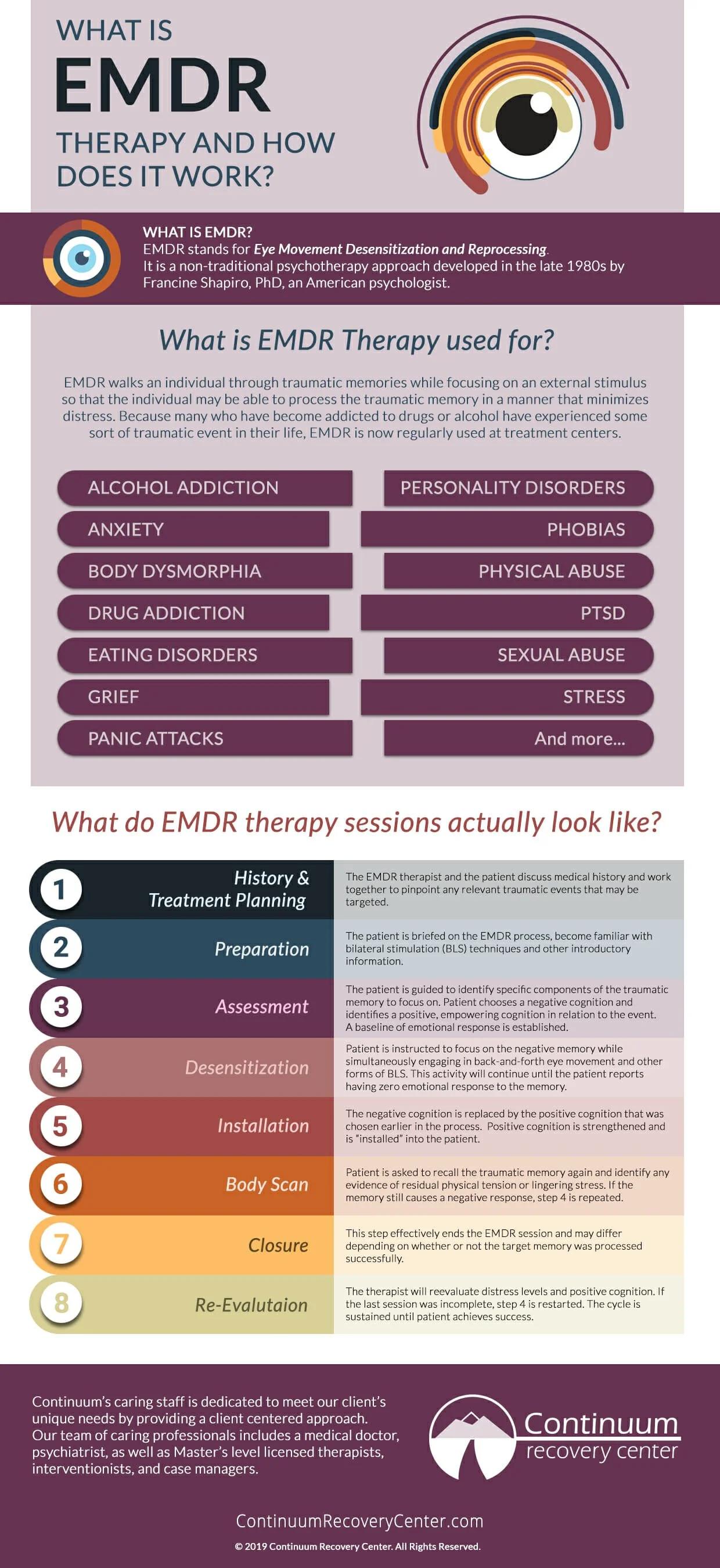
I encourage folks to check out the EMDRIA website for reliable information and resources on EMDR. They have a good intro page with a video here. Below is an infographic to break down the process by Continuum Recovery Center. It’s more than just moving your eyes!